Tuesday, March 8, 2011

Another poem, for a ridiculously early morning...

...And why am I awake, so ridiculously early? Or late, such as it may be? It is masochistic.

O, always the soft idiot, softly me, as Mr. Auden has said.

There is no good answer, especially at four ayem.

Merely commiseration.

Tomorrow (or, um, later today) I shall walk about like the monks in the Holy Grail:

Pie Jesu Domine, dona eis requiem.
Dona eis requiem sempiternam.
(whack)

Oh, well.

It's only a flesh wound. Figuratively, of course.


Law, Like Love

Law, say the gardeners, is the sun,
Law is the one
All gardeners obey
To-morrow, yesterday, to-day.

Law is the wisdom of the old,
The impotent grandfathers feebly scold;
The grandchildren put out a treble tongue,
Law is the senses of the young.

Law, says the priest with a priestly look,
Expounding to an unpriestly people,
Law is the words in my priestly book,
Law is my pulpit and my steeple.

Law, says the judge as he looks down his nose,
Speaking clearly and most severely,
Law is as I've told you before,
Law is as you know I suppose,
Law is but let me explain it once more,
Law is The Law.

Yet law-abiding scholars write:
Law is neither wrong nor right,
Law is only crimes
Punished by places and by times,
Law is the clothes men wear
Anytime, anywhere,
Law is Good morning and Good night.

Others say, Law is our Fate;
Others say, Law is our State;
Others say, others say
Law is no more,
Law has gone away.

And always the loud angry crowd,
Very angry and very loud,
Law is We,
And always the soft idiot softly Me.

If we, dear, know we know no more
Than they about the Law,
If I no more than you
Know what we should
and should not do
Except that all agree
Gladly or miserably
That the Law is
And that all know this
If therefore thinking it absurd
To identify Law with some other word,
Unlike so many men
I cannot say Law is again,

No more than they can we suppress
The universal wish to guess
Or slip out of our own position
Into an unconcerned condition.
Although I can at least confine
Your vanity and mine
To stating timidly
A timid similarity,
We shall boast anyway:
Like love I say.

Like love we don't know where or why,
Like love we can't compel or fly,
Like love we often weep,
Like love we seldom keep.

—W.H. Auden

Monday, March 7, 2011

Rake

Townes Van Zandt oughta be 67 today.

First, a really excellent version of Waitin' Around to Die. Next, a brief interview and song from 1984's Austin Pickers (Townes does Racin' in the Streets). Third, His son JT sings Blaze Foley's Clay Pigeons, on the patio over at Threadgills, looking and sounding a helluva lot like his daddy. Last is probably my favorite of his songs, Lover's Lullabye, recorded not long before his death.

Townes lived hard, and died way too damn young. He was a truly one of the greats.


A Poem for You

A few lines from the greatest poet to write English amid the ruin we refer to as the twentieth century.

The Song of Wandering Aengus

I went out to the hazel wood,
Because a fire was in my head,
And cut and peeled a hazel wand,
And hooked a berry to a thread;
And when white moths were on the wing,
And moth-like stars were flickering out,
I dropped the berry in a stream
And caught a little silver trout.

When I had laid it on the floor
I went to blow the fire a-flame,
But something rustled on the floor,
And someone called me by my name:
It had become a glimmering girl
With apple blossom in her hair
Who called me by my name and ran
And faded through the brightening air.

Though I am old with wandering
Through hollow lands and hilly lands,
I will find out where she has gone,
And kiss her lips and take her hands;
And walk among long dappled grass,
And pluck till time and times are done,
The silver apples of the moon,
The golden apples of the sun.


—William Butler Yeats

Admittedly, this poem, written when he was scarcely 30, is emblematic of the early romantic period some scoff at.

I rather like it.

Besides, even minor Yeats is better than most anything else.

Where does it go, you think? That which dwindles, into air?

Sunday, March 6, 2011

Remember the Alamo

175 years ago today, Davy Crockett, Jim Bowie, William Barret Travis, and 179 of their compadres died at the Alamo.

Col. Travis died in the first hour of the final assault, defending the north wall. Emptying his pistol into the invaders, he perished from a single gunshot to the head.

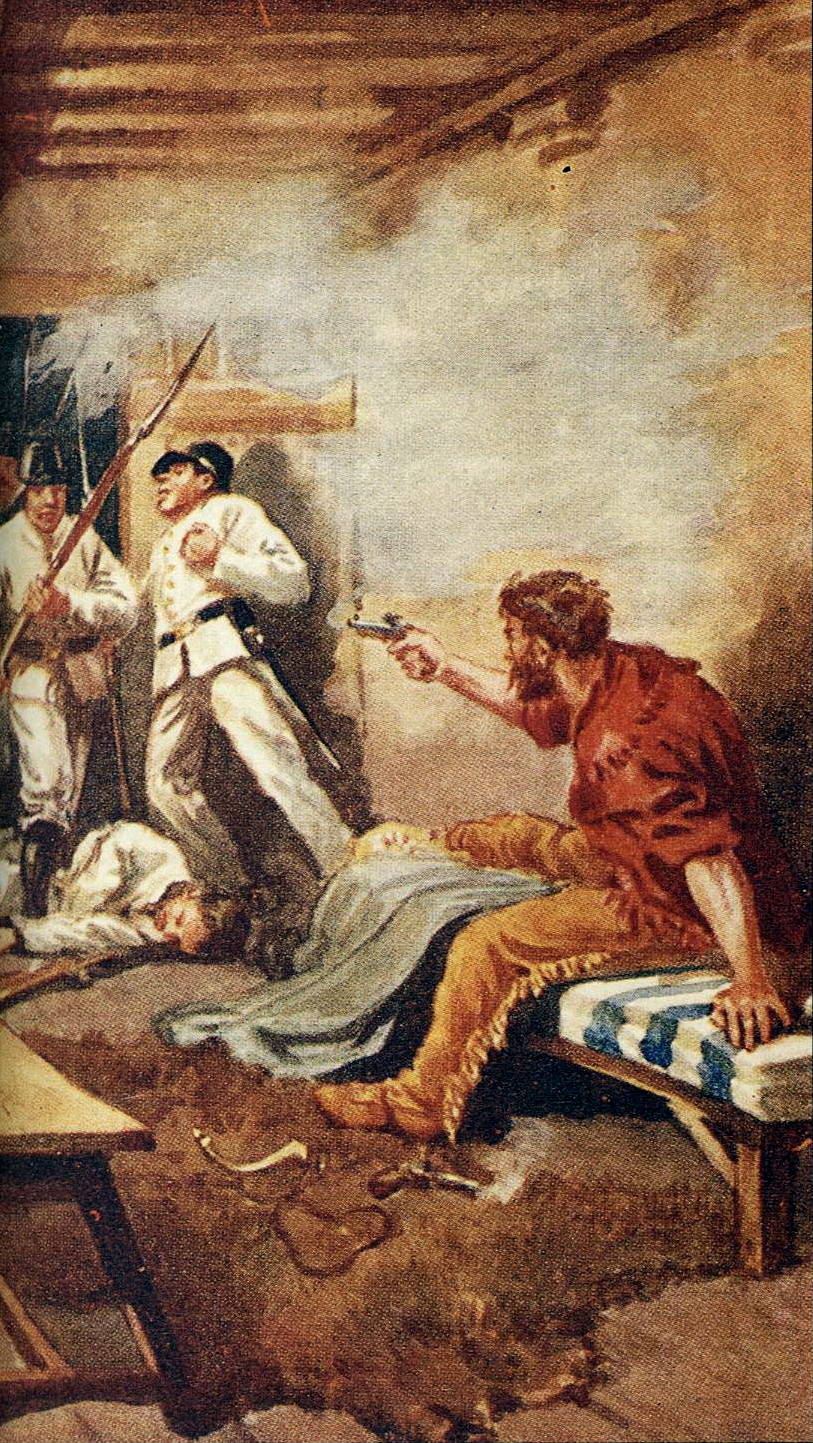
Col. Bowie had been ill for days, and mostly bedridden, suffering either from typhoid or viral pneumonia. He died on his cot, back against the wall, spent pistols at his side, enemy troops on the floor.

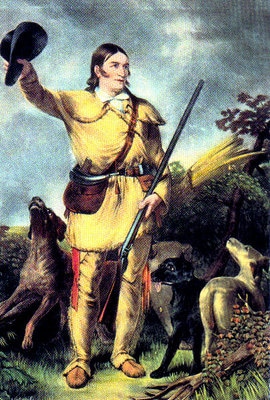
Col. Crockett died in the final assault with the rest of his volunteers, defending the low wall front of the church. Eyewitnesses have said there were a total of 16 Mexican troops dead on the ground around him.

Just as he would so inadviseably order at Goliad several weeks later, no quarter was given. Just as at Goliad, the bodies of the Texas dead were piled together and set on fire, left for the critters. Santa Anna believed this would scare them away from engaging his army again, just as others, in subsequent years, thought shock and awe to be enough. Instead, he intensified the Texas resolve, and volunteers began pouring in to defeat him. Had he shown a little mercy, who knows?—he may have won, and history may have been quite different .


Bob Wills Is Still the King

Today is Bob Wills birthday.

If you don't know who he is, you probably don't come from Texas, so don't admit it.

My Granddad told me that he saw Bob and his Texas Playboys dozens of times; for awhile in the thirties, he said, seemed like every weekend you could find em playing at some fair or rodeo thereabouts.

Bob Wills and the Texas Playboys for the price of a ticket to a damn rodeo. Blows my mind.

In the little towns of Texas, they still play Bob's music all the time. If you had to choose a soundtrack for Texas, it could be no one else, not even Willie, not even Waylon, cause they couldn't have happened without him.

First video is my favorite of his songs Big Ball's in Cowtown. Fucking rocks.

Next, the favorite song of my Grandmother (on my mom's side), and probably their best known tune, San Antonio Rose. This was recorded at the Grand Old Opry according to the title, though it doesn't look like the Opry to me, plus they're not wearing their hats, and they look like they're all slicked up to be presentable to Yankees, or some other foreigners, though, hell, who knows. Bob and the Opry didn't always get on real well, being that he insisted on using drums (they weren't allowed at the Opry in those days. Bob began his career working in tent and minstrel shows; you'll see that he's pretty active on stage, and emits odd noises. Do not laugh. It's like admitting you don't *get* the Great Bob Wills, and you will be required to sit back of the class. And if people throw shit at you and call you rude names, oh well.

The third is a weird curiosity kinda video, the Stones doing Waylon's immortal Bob Wills Is Still the King, from '07, at Zilker Park, in Austin. It is strange, but respectful, and it's really funny to hear Jagger trying to sound Texas-y.

Last is an incredible video. It's the favorite song of my other Grandmother (on my Dad's side)(in Texas, what Elvis is to moms, Bob Wills is to grandmoms), Faded Love, one of the first songs Bob wrote. It was recorded long after Bob had passed away, sometime in the eighties, at the Texas Playboys' final performance. It is, in fact, the final song they ever perform, together, and I urge you to watch it. It's very affecting.

(If you see acts calling themselves the Texas Playboys, they are really just a tribute act. Most of em are long dead)


Saturday, March 5, 2011

Goodnight


Charlie Goodnight, upon whom Captain Woodrow Call was loosely based, was born this day, in 1836.

If you're not familiar with Charlie's life and accomplishments, you can read more about him here. In 1867, when he and his friend Oliver Loving were taking a herd to New Mexico, Loving rode ahead with one of the scouts to negotiate a price before their arrival. He was reckless, though, and travelled during the daylight. Mortally wounded by Comanches, he managed to make his way into Fort Sumner, and died there, of gangrene poisoning. Loving made Goodnight promise to bring him back to Texas for burial. Leaving Loving's body there to winter while he drove on ahead to Denver with the herd, he fetched him in the spring, and kept his word.

It's also said that the gravestone that Captain Call carved out for Deets is based on one that Charlie carved for one of his riders:

JOSH DEETS
SERVED WITH ME 30 YEARS.
FOUGHT IN 21 ENGAGEMENTS WITH THE COMMANCHE AND KIOWA.
CHERFUL IN ALL WEATHERS, NEVER SHERKED A TASK.
SPLENDID BEHAVIOUR.

Yep. Best not start thinking about old Deets.

J. Frank Dobie said that Charlie Goodnight was the greatest of all Texas cowboys. In the parlance of my Granddads time, that's a lotta country. Perhaps it's symbolic that he came into this world while El Deguello was drifting over the Alamo walls, making the fitful sleep of our boys there, their last night upon this earth, more mournful, still.

175 years ago, today.

Friday, March 4, 2011

Harlow

The first thing you should know about Jean Harlow is that she was referred to among her family and friends as "Baby". She did not know her given name—Harlean—until she began school, at age 5.

The crews on the movies she worked on loved her, for her kindness and her lack of pretension. Between scenes, she'd be more likely discovered shooting craps with them than back in her dressing trailer. She had a soft heart, and was known for it; many was the time they'd come to her, with a problem, or for a loan, and she never turned em away.

She never wanted to be an actress. That ambition was all her mother's (as was the name—Jean Harlow). She was discovered by accident, at 17 years old. She drove an actress friend to the Fox Studios. While waiting in the car, studio execs noticed her, offered her work. After relating the incident to her mother, her resistence was worn down, and she was on contract later in 1928. The following year, she was noticed by Howard Hughes, who cast her in his megahit Hell's Angels. She was a sensation, though not because of her acting. In fact, the critics universally agreed that her performance not only in Hell's Angels, but in each of her early pictures, was pretty awful. Variety pointed out the obvious, though, in 1930. "It doesn't matter what degree of talent she possesses—nobody ever starved possessing what she's got."

It was often her mother's persona you'd see on screen. She was always quick to say that she was nothing like the women she portrayed, and her friends back her up. "Jean was always cheerful, full of fun," said Myrna Loy, who was one of her closest friends, "but she also happened to be a sensitive woman with a great deal of self-respect. All that other stuff --that was put on. She just happened to be a good actress who created a lively characterization that exuded sex appeal."

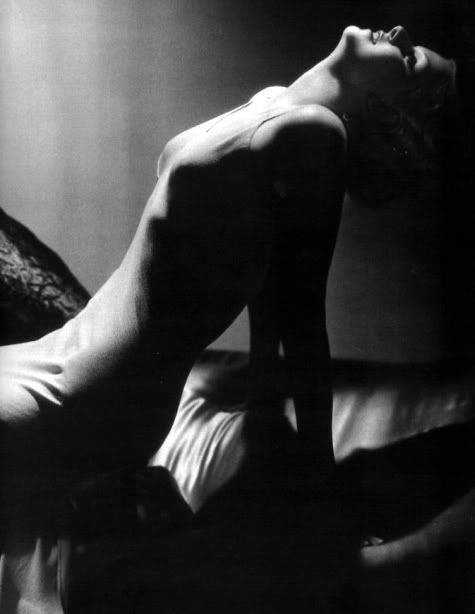
She never wore underwear. And though she slept in the raw, every morning she would crumple up a nightgown, and leave it on her bed. She was embarrassed for her maid to know.

Though she was popular, her pictures were pretty bad, and her acting did not elevate them. Audiences flocked to see them, though, by virtue of her...charisma. It wasn't until 1932, when she was noticed by Irving Thalberg, and her contract was purchased by MGM, that she was given the opportunity and the guidance she needed to become a legend. It was simply a matter of relaxing on-screen. Once she did, audiences could sense her earthiness and her sense of humor—she was goddamn funny, had a natural comic gift—which, if anything, only enhanced the sensuality she projected on-screen. Red Headed Woman and Red Dust were the first two films she made there, both opposite Clark Gable. If you haven't seen her shower scene (in a rain-barrel) in Red Dust, you are film-deprived. "She was 21 in Red Dust," observed contemporary producer David Stenn. "I audition hundreds of actresses every year and I have yet to see one with that kind of poise, that grace. The physicality of Jean Harlow's performances, the comfort she has with her body, you don't see that today because actresses don't learn it."

I love her in those pictures, as well as Dinner at Eight, China Seas, Libelled Lady, and a number of others—but it was Bombshell that really sold it, for me. My words could never do justice to her performance—just thinking of the scene on the staircase, where she tells em all off, I feel a little thrill, the memory of something absolutely unique and extraordinary—and how she was able to be so fucking funny, so fucking vulnerable, and so fucking sexy—simultaneously—I cannot tell you. It's a damn rare feat.

The original Rin Tin Tin and his trainer, Lee Duncan, lived across the street from Harlow. In 1932, he and the German Shepard were fooling around, when the dog—14 years old at the time—was stricken with some kind of illness. Harlow ran across the street to help, and while Duncan was fetching a vet, Rin Tin Tin died, in her arms.

She was quoted as saying: "Men like me because I don't wear a brassiere. Women like me because I don't look like a girl who would steal a husband. At least, not for long."

From childhood, Marilyn Monroe idolized her, patterning herself after her, and later becoming rather spooked at the similarities in their lives. "I kept thinking of her, rolling over the facts of her life in my mind," Marilyn is quoted, in 1957. "(It's) kind of spooky, and sometimes I (think), am I making this happen? But I don't think so. We just seem to have the same spirit or something, I don't know. I keep wondering if I will die young like her, too." It was her dream to portray Harlow, in a bio-pic, and she went so far as to meet with Harlow's mother, a month before she died. It was to be her next project. Interestingly, her last film was The Misfits, with Clark Gable. Harlow's, of course, was Saratoga—with Clark Gable.

"She didn't want to be famous," Gable has been quoted as saying, about Harlow. "She wanted to be happy."

There are many misperceptions about Harlow, but one of the most persistent is that she died because her religious beliefs precluded medical treatment. Another is that she was misdiagnosed by a quack, and died needlessly. In truth, she was receiving constant medical care, and while it's true that her doctor missed the diagnosis, it didn't matter. She died from advanced kidney disease, caused probably by a case of scarlet fever she suffered when she was a child, and there was no treatment in 1937 that could've saved her.

William Powell, her fiance, and Myrna Loy, maybe her closest friend, were filming Double Wedding when Harlow collapsed. Production was interrupted, of course, for many months. After lapsing into coma, Jean Harlow died, June 7, 1937. She was 26.

Her death affected many. MGM writer Harry Ruskin is quoted as saying,”The day Baby died there wasn’t one sound in the commissary for three hours...not one goddamn sound." At her funeral, though her pallbearers included directors (W.S. Van Dyke and Jack Conway), a film producer(Hunt Stromberg), a famous actor (Clark Gable), her business manager (Edward Mannix), the film crews were represented, too, by cameraman Ray June. It is said that William Powell, who paid for the $25,000 tomb (a lot of money, especially then—more that a quarter of a million, in today's dollars), slipped a single white gardenia into her casket, and a note in her hand. For the remainder of his life, he sent her fresh flowers.

The inscription on her grave is simple, and to the point. "Our Baby," it reads.

Jean Harlow, born Harlean Carpenter, was born this day, in 1911. Today is her centenniel. If you do not know her films, please, give them—give her—a chance. If you love movies, as I do, she is indispensible.

The first film clip is of the shower scene I referenced, in Red Dust. Next, a clip from Bombshell, beginning with Harlow's character entertaining women from the orphan home from which she's attempting to adopt a baby. She's trying to maintain a facade of a tranquil domestic life, which her family and her studio publicist take a wrecking ball to, with characteristic self-centered zeal. The scene I told you about, where she goes off on the lot of em, begins about 9 minutes in.


Thursday, March 3, 2011

Harbinger

To anyone being honest, it is clear that world capitalism, especially at it is practiced in these United States, has evolved into a model far different than anything Adam Smith or David Ricardo ever imagined.

With that in mind, let us celebrate the anniversary of the birth of modern capitalism's spiritual father.

Charles Ponzi was born this day, in 1882. While there have occurred a number of refinements since his time—we can only imagine how impressed he would be with the idea of credit default swaps—I think it's fair to say that whenever suckers are being screwed anywhere, old Charlie's in the room.

His were different times, of course, and poor Charlie spent some time in prison, and was ultimately deported. Today, of course, he would work for Goldman Sachs, probably as chairman. Instead of strutting around with a gold-tipped walking stick (per the photograph, at right), he could gird himself in his golden parachute, and tell the rest of the world to go fuck itself.

Yeah, happy birthday, Charlie. You're being feted in boardrooms all over Wall Street, I'm sure.

Wednesday, March 2, 2011

On Ravens, Republics, and Revolutions

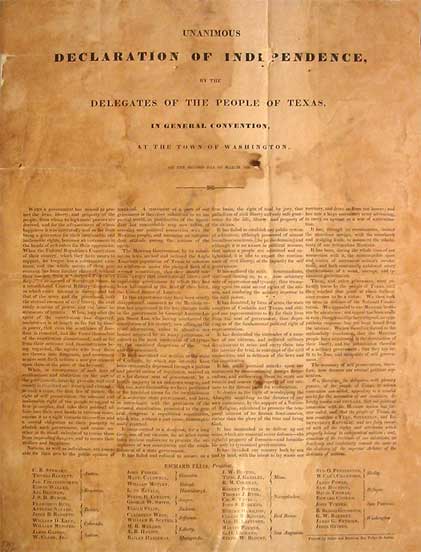
175 years ago today, Texas became a free and independent nation (in theory, cause Santa Anna and his armies were swarming around, paying particular attention to our boys bottled up at the Alamo). We had no real army, no great store of munitions, very little wealth, no constitution, and not even a real flag. But we had our declaration, damn it (if you doubt me, just peek over to the right—see it? Reckon you won't be so quick to crowd me next time, will you?)

The great document was signed at a mudhole on the Trinity River, re-named, thereafter, with the usual Texas flair for understatement, as Washington-on-the-Brazos. The most auspicious deed performed that day, though, was the re-appointment of Sam Houston as Commander of all Armed Forces (all 12 of em).

Houston was quite a guy, as you may have heard. Great soldier, and statesman. Lived among the Cherokee on several occasions (it was they who tagged him as Colonneh, or The Raven), and advocated for them in Washington, beating a yankee-weasel congressman damn near to death along the way, which would justify a career for most guys. Sam was just gettin started though, arriving in Texas in 1833, fashioning an army from the ragtag bunch of malcontents and hotheads at his disposal to beat the far superior forces of Santa Anna at San Jacinto, before becoming Texas first elected president. He also served as Senator, once Texas joined the union, and as Governor (he was once Governor of Tennessee, as well, but that's a long story for another day).

Yeah, you might say that Sam and Texas are inextricably linked—you cannot delve into the essence of either without discovering the other. How fitting, then, that on this day, the birthday of Texas, we also celebrate the birth of the man who made it so. Sam Houston was born this day, in 1793.

Depicted atop his famous steed, Saracen, at right, Sam was a fighter to the end. As Governor during the build-up to war and secession, he was nearing seventy years old, but was often known to scrap in the streets of Austin in defense of the Union. He warned em all what would happen, but they didn't listen, of course. Lincoln offered him 50,000 Federal troops to quell the rebellion, but Sam reluctantly refused. While he couldn't fight against the union, he couldn't shed his own people's blood, either.

Deposed from his office, he retired to Huntsville, dying in 1893, with Texas on his lips. His last words are reported to be "Texas! Texas! Margaret..."

Tuesday, March 1, 2011

Sociopaths, in Tailored Suits

Don't delude yourself that the creatures of Wall Street are people like you and I—that they have human feelings, like empathy, or any kind of appreciation for morality. They are entirely self-centered, pitiless, and the damage they cause is limited only by the barriers around them.

Knowing this makes the aftermath of their behaviors less shocking.

Case-in-point: Certainly you are familiar with the proliferation of check-cashing and pay-day lending outfits over the past few years. Hell, they're on every street corner, it seems, charging poor people 200% on loans, charging exorbitant fees to cash checks. They prey especially upon illegals, who have nowhere else to go, and upon those with bad credit. During this check-cashing and pay-day lending boom, banks have also tightened up on the availability of bank accounts to the aforementioned, no coincidence, given that the predatory lenders and check-cashers who fill the subsequent void are bankrolled by Bank of America, Wachovia, Chase, Wells Fargo, U.S. Bancorp, et al. Yeah, you read that right—Cash America is in reality just a branch of Chase or BOA (just a little more honest in their principles).

One of the few good things to come from the watered down Wall Street Reform Act was the establishment of a Consumer Financial Protection Bureau, tasked with regulating consumer financial products and services in compliance with federal law. Seems to be a common-sense, uncontroversial mandate, right? Well, from the squalking Wall Street has made about the provision, you'd think that it was the end of the fucking world, especially after Elizabeth Warren, a Harvard Law proff known for her brilliance, her ethics, and for her clear-eyed understanding of the Big Banks, was appointed to lead it (a bone Obama threw to his crumbling liberal constituency—after months of intense lobbying by same—though if she'll ever be confirmed, God only knows).

Wall Street is currently pulling out all the stops to gut the Bureau (or, preferably, kill it) and predictably have enlisted their usual lapdogs (aka, The U. S. Chamber of Commerce) to lobby it, engaging in their usual misdirection. Their M.O. is to hide behind other organizations, knowing the unpopularity of their brand. Their new partners (shills) are interesting, though.

From today's Huffington Post:
During a Tuesday conference call organized by the Chamber, coalitions ostensibly comprised of companies outside the financial sector argued that the nascent federal Consumer Financial Protection Bureau will hurt their bottom lines. But while those groups, the International Franchise Association and the Manufactured Housing Institute, include payday lenders, check-cashing agencies and mortgage lenders-- exactly the kinds of firms the CFPB is designed to regulate.

Kinda precious, ain't it? Their sociopathic brains are irony-immune, obviously.

Once more, remember who the enemy in this battle is. Despise them, for what they are—and do not delude yourself. They will not be beaten with negotiation.